





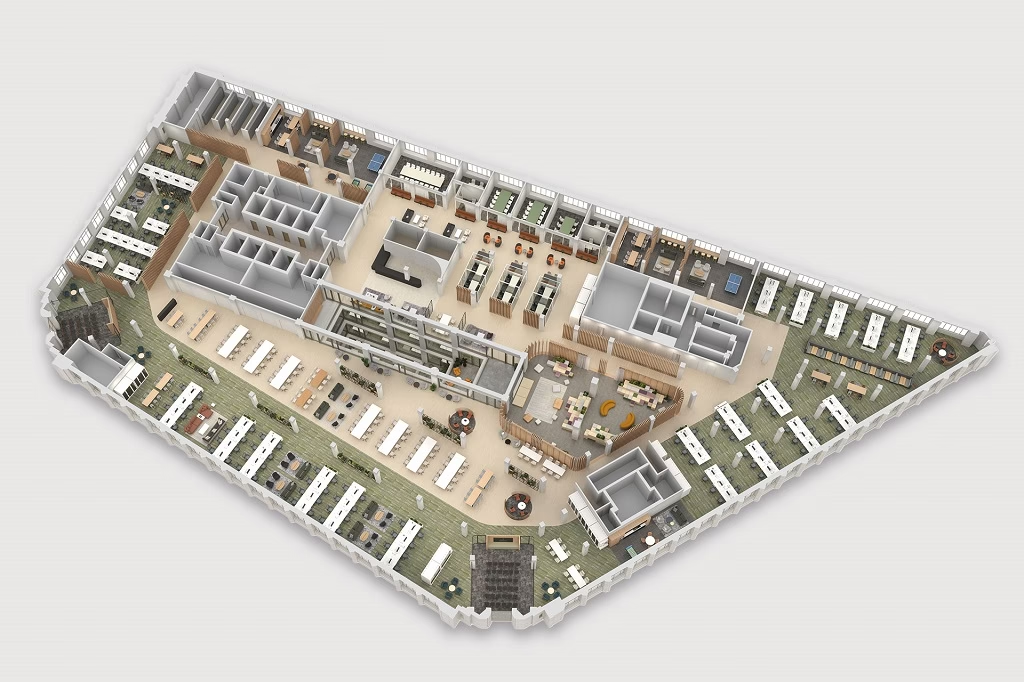
Matic is proud to be supporting the transformation of the Rylands Building in Manchester, delivering a major programme of building services works across mechanical, electrical, public health and life safety systems.
Working alongside our Domis Group partners and end client AM Alpha, this landmark refurbishment demands modern performance, meticulous coordination, and uncompromising safety standards. The scale of that delivery is best understood through the numbers.
MEP installation scope on the Rylands Building refurbishment
Across public health and drainage, the project includes more than 2,100 linear metres of above-ground foul drainage, alongside 6,750 linear metres of domestic hot and cold water distribution. That core network is supported by a major heating and cooling strategy, with over 28,000 linear metres (28km) of HVRF wet heating and cooling pipework installed across the development.
Ventilation is equally substantial, comprising 5,325 linear metres of spiral ductwork and nearly 10,000m² of rectangular ventilation ductwork. This is complemented by dedicated smoke ventilation infrastructure, including extract ductwork provisions and 3,225 metres of associated cabling, helping to ensure safety performance is engineered into the building’s operation from day one.
Life safety, sprinkler systems and smoke ventilation infrastructure
Life safety is further reinforced through the fire protection systems, where 30,000 linear metres (30km) of sprinkler pipework will form the backbone of protection throughout the building. Alongside this, the smoke ventilation strategy supports safe management of air movement in critical areas, integrated into the wider ventilation installation and coordinated with the overall building services programme.
In a heritage environment, these systems must be installed with precision and planned sequencing, ensuring compliance and performance without compromising the integrity of the existing structure.
Electrical containment, lighting controls and smart building systems
Matic’s electrical delivery is being installed at significant scale, with over 15,500 linear metres of busbar, more than 33km of galvanised conduit containment, and 87km+ of LSF conduit wiring integrated into the wider electrical installation. The building’s digital network is supported by over 15km of CAT6 data cabling, with 1,800+ linear metres of earthing and bonding conductors underpinning safe, resilient performance.
The fit-out and end-user experience is powered by a major lighting and controls package, featuring over 10,000 lighting and emergency fittings, supported by 1,665 sensors to enable an efficient, responsive lighting strategy. Across office and core spaces, the small power delivery includes 1,711 floor boxes, over 1,000 FCUs and spurs supporting local power distribution, and nearly 300 socket outlets across tenant and support areas. Specialist systems are also a key part of the programme, including more than 9,000 linear metres of VRF/HVRF refrigeration pipework (liquid and gas lines) supporting comfort and performance requirements across the development.
Restoring a landmark building is never simply about replacing what came before. It is about integrating modern, compliant, future-ready services while working within the complexity of a heritage environment. This programme reflects the scale of coordination and delivery required to achieve that, with confidence in every condition.